
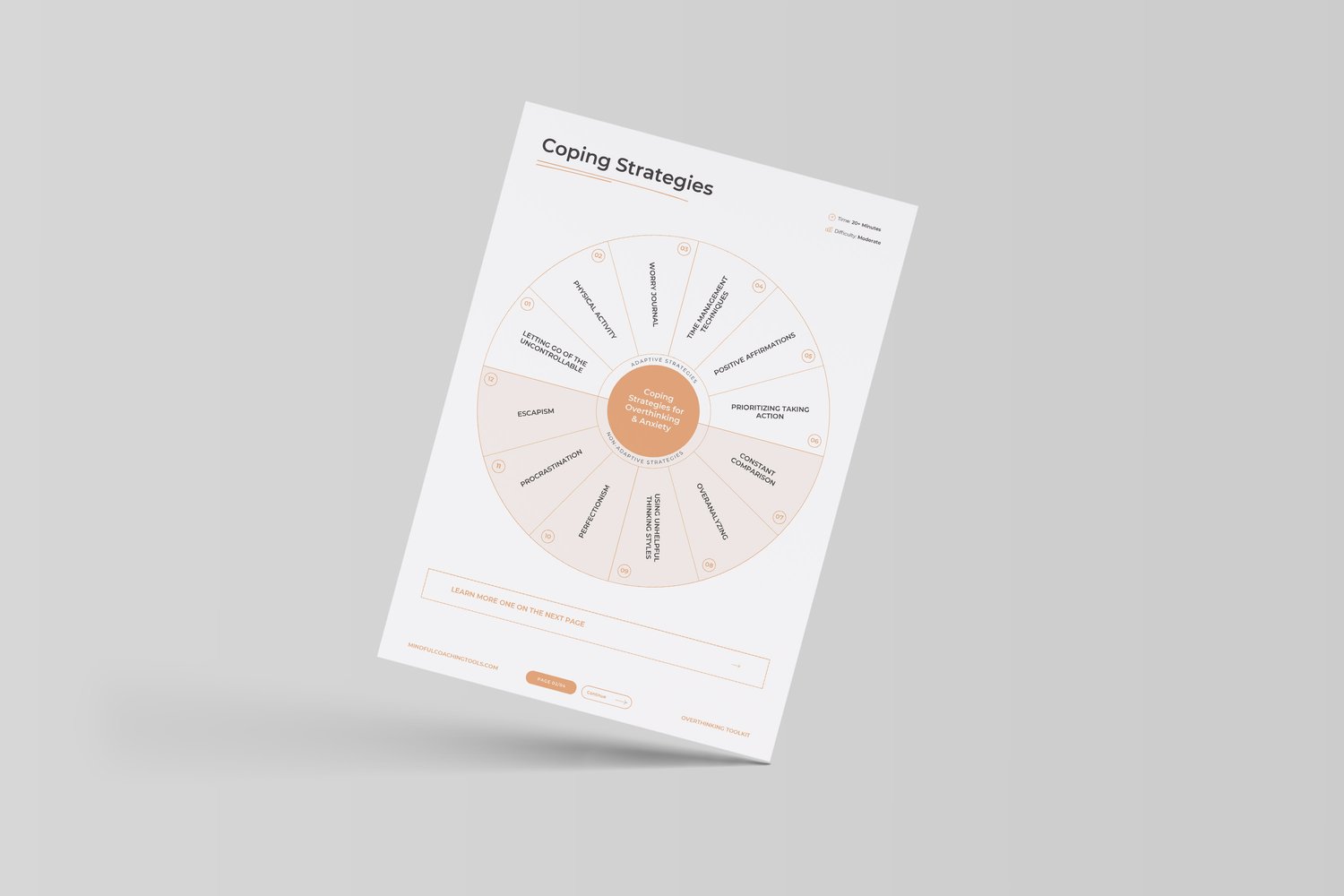
Coping Strategies for Overthinking & Anxiety (PDF Worksheet)
On Sale
$0.00
A Free PDF Coaching & Therapy Tools
This exercise is designed to help you get a better understanding what are some adaptive (good) and non-adaptive (bad) coping strategies for anxiety & overthinking (remember that they’re intertwined!). This is important because overthinking is often caused by some underlying fears and anxieties that do not get properly addressed due to using non-adaptive coping strategies that don’t help long term. The exercise will help you become more aware of your own coping patterns and replace counter-productive ones with more productive alternatives.
HERE’S WHAT TO KEEP IN MIND BEFORE YOU GET STARTED:
- Coping strategies can be categorized as adaptive or non-adaptive, but this distinction depends on the situation at hand. Non-adaptive coping strategies may be adaptive in certain circumstances, and adaptive coping strategies may become non-adaptive if overused or used in the wrong way.
- To truly commit to changing your coping patterns, you first need to identify WHY the HOW you cope is negative in the long term. This will help you brainstorm (while using the Adaptive Coping Cheat Sheet on the next page as a guide) new strategies that you can replace them with and the concrete steps you should take.
- Remember that overdoing any of the coping strategies becomes non-adpative at some point. How do you know when? A simple question you can ask yourself is: 1) What will happen in long term if I keep coping in this way?
What's included?
- Interactive PDF Worksheet