
CBT ABCDE Worksheet (PDF)
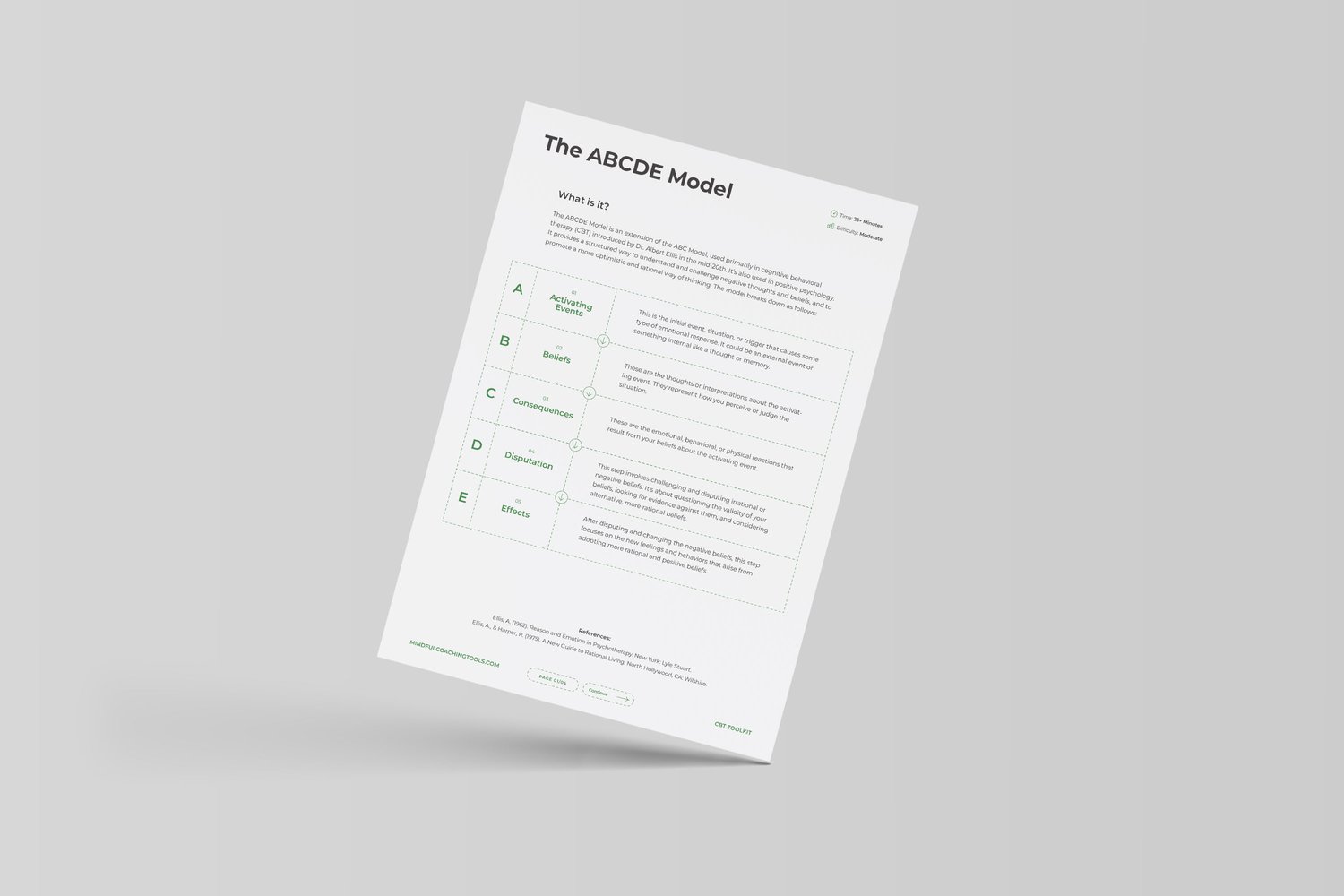
The ABCDE Model is an extension of the ABC Model, used primarily in cognitive behavioral therapy (CBT) introduced by Dr. Albert Ellis in the mid-20th. It’s also used in positive psychology. It provides a structured way to understand and challenge negative thoughts and beliefs, and to promote a more optimistic and rational way of thinking. The model breaks down as follows:
"A" – Activating Event
Describe the situation or event objectively, without interpreting it yet. Just the facts about what happened that triggered your emotional response.
Example: I showed up to meet my friend Sara for lunch and she was 30 minutes late.
"B" – Belief
Identify your automatic thoughts and beliefs about the event. Typically these initial interpretations are negative. Ask yourself "What thought went through my mind when this happened?"
Example: Sara doesn't respect my time. She's flaky and inconsiderate.
"C" – Consequences
Connect the beliefs to the emotions you felt and actions you took in response. Your beliefs directly influence your emotions and behaviors.
Example: I felt angry and annoyed. I sent her a rude text asking where she was.
"D" – Dispute
Examine your automatic thoughts for cognitive distortions. Look for evidence that contradicts your beliefs or alternative perspectives. Challenge the negative beliefs.
Example: Just because she was late one time doesn't mean she's always flaky. Maybe she got stuck in bad traffic. I shouldn't make assumptions about her motivations.
Critical Questions:
- Is this belief generally causing more harm than good?
- Does this belief reflect the truth?
- Does it promote achieving sound goals?
- Does it support the nurturing of positive relationships?
"E" – Effect
Describe how you feel and what you could do differently after disputing your initial thoughts. This new outlook should improve your emotional response.
Example: I feel calmer and will wait to understand why she was late before jumping to conclusions. I apologize for the rude text.
For a whole bundle of editable and fillable coaching tools (including the one on this page!), check out the following bundle:
https://shop.mindfulcoachingtools.com/b/cbt-tools-and-exercises-for-coaches